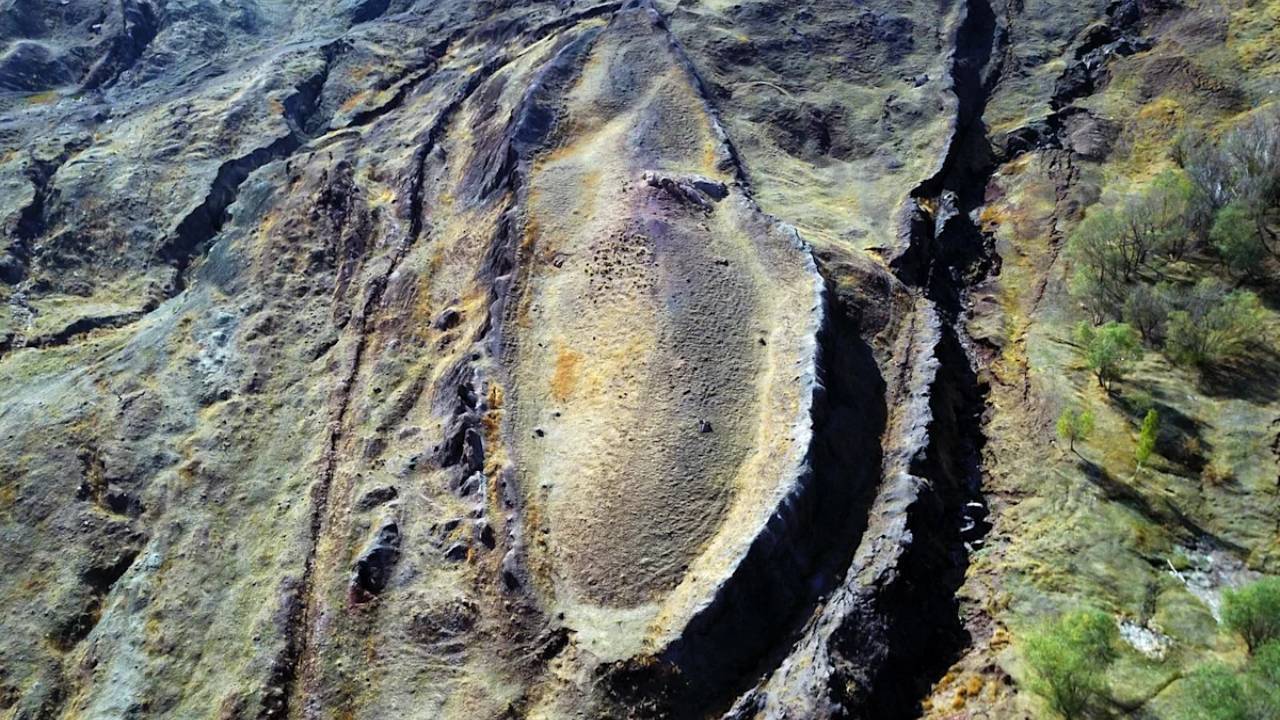
For decades, treasure hunters and skeptics alike have argued over a boat-shaped mound of dirt in eastern Turkey. Known as the Durupinar formation, this geological curiosity near Mount Ararat refuses to stay out of the headlines. Right now, it's back in focus because an international team of researchers actually brought heavy drilling equipment to the site for the first time. They pulled soil samples from up to sixty feet deep, trying to answer a simple question: is there ancient wood buried down there, or is nature just playing tricks on us?
If you want straight answers, you won't get them yet. Science doesn't work that way. But the latest field season, involving roughly twenty scientists across five countries, has uncovered data that makes the debate a whole lot more interesting than a standard internet conspiracy theory.
Breaking Down the Durupinar Drilling Project
The core of the recent work centers on physical extraction rather than surface-level guesswork. Past expeditions relied on ground-penetrating radar, visual inspections, and plenty of wishful thinking. Critics, including geologists who published studies back in the late nineties, pointed out that natural erosion and tectonic activity can easily shape mud and rock into symmetric, hull-like ridges.
Andrew Jones, vice president of the Noah's Ark Research Project, noted that the drilling rig didn't hit a solid wall of limestone or bedrock as expected if the whole thing were a purely natural stone monolith. Instead, the team punched through layers of loose soil and fill.
That doesn't mean they struck a massive timber beam, but it does shift the parameters of the discussion. When you stick a drill sixty feet into a mysterious formation and pull up material instead of solid rock, you open the door for actual laboratory testing.
The Organic Carbon Anomalies
What has researchers genuinely talking isn't a visual sighting of petrified planks. It is chemistry.
Soil samples pulled from inside the boundaries of the Durupinar formation showed organic carbon levels roughly forty percent higher than control samples collected outside the structure. That is a measurable variance. High organic concentrations can point toward decaying biological matter, which fits the hypothesis that an enormous wooden vessel might have decomposed over millennia.
At the same time, cautious scientists remind everyone that organic matter can accumulate through normal geological processes, ancient vegetation growth, or runoff from higher elevations on Mount Ararat. The samples taken during this field window are currently sitting in labs across multiple institutions. Winter analysis will determine if those carbon spikes actually link back to structural human artifacts or if they tell a more mundane ecological story.
Pottery Fragments and the Human Element
Another piece of the puzzle came from the surrounding terrain rather than the mound itself. The team recovered ancient pottery fragments scattered near the broader Mount Ararat site.
These shards fit a historical timeline that could align with ancient human habitation in the region. If people were living right next to the formation centuries ago, it suggests the location held significance long before modern explorers showed up with cameras and satellite maps.
Even so, finding pottery nearby doesn't prove the mound itself is a vessel. It just means ancient communities existed in the shadow of the mountain. You can connect those dots however you want, but archaeology requires strict chronological proof before drawing direct lines between stray kitchenware and a biblical maritime disaster.
Sifting Fact From Folklore
It's easy to mock expeditions hunting for ancient religious artifacts. Scientists themselves often joke about the enterprise. Jones has even compared the public perception of the search to looking for fantasy figures. Skepticism is healthy here because the history of Ararat claims is littered with hoaxes, bad measurements, and outright fabrications.
Yet, shifting from armchair arguments to physical core samples changes the quality of the debate. Whether the Durupinar formation turns out to be an extraordinary archaeological find or just an unusually shaped pile of earth shaped by natural forces, running lab tests on sixty-foot core samples beats guessing on social media every single time.
Check the laboratory findings when peer-reviewed data drops later this year. Until then, treat the claims with the exact measure of skepticism that real science demands.