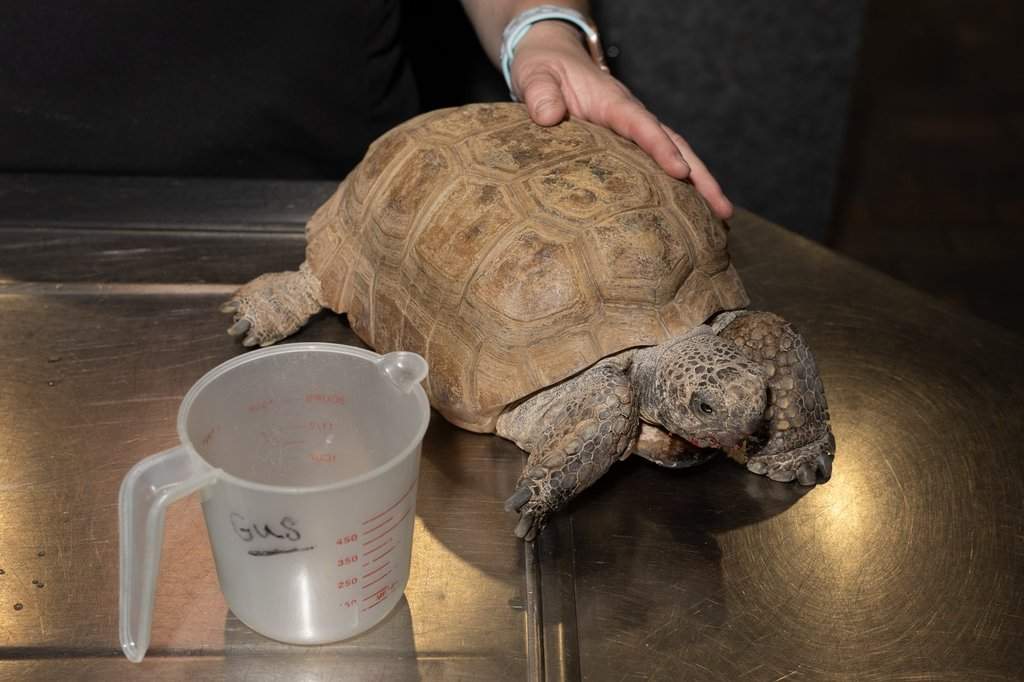
Hundreds of letters, custom get-well cards, and hand-drawn portraits are piling up at a museum desk in Halifax. The recipient isn't a celebrity, a politician, or a local hero. It’s Gus. He's a 104-year-old gopher tortoise.
Gus lives at the Museum of Natural History, where he's basically held court since 1942. When museum officials announced that the centenarian reptile needed surgery to remove a growing bladder stone, the public reaction was instant. People who visited Gus on school field trips decades ago are now sending well-wishes alongside their own grandchildren. It's a rare moment of collective warmth on the internet.
The Backstory of a Museum Legend
Most wild gopher tortoises lucky enough to avoid predators and habitat loss live to be around 60. Gus blew past that milestone decades ago. Back in 1942, a former museum director bought him in Florida for just five dollars. Since then, he has quietly become a permanent fixture of Canadian institutional life.
He isn't locked away behind thick glass, either. Regular visitors know his routine. When the weather is nice, he takes a slow stroll across the museum's grassy yard. On rainy or cold days, he patrols the indoor exhibits or bakes under a heat lamp. Tourists from all over the world plan their Nova Scotia trips specifically to watch him munch on strawberries, lettuce, and bananas.
Modern Veterinary Science Changes Everything
Veterinarians first spotted a bladder stone in Gus back in 2009. For years, they monitored it closely. But a recent scan showed the stone had grown large enough to start pressing against his internal tissue. Left alone, it would eventually cause serious discomfort.
Treating a reptile this old used to carry massive risks. Decades ago, removing a bladder stone from a tortoise meant drilling straight through the hard keratin of the shell. It was invasive, stressful, and slow to heal.
Medical technology has come a long way since the mid-20th century. Modern reptile veterinary teams can now perform the exact same extraction through a tiny incision near the leg. It minimizes trauma and drastically speeds up recovery. Even so, operating on a patient over a century old is rare territory. Museum staff and vets agree that the procedure gives him the best shot at a comfortable, pain-free future, despite his advanced age.
Why We Attach Ourselves to Animals Like Gus
Humans have a weird, beautiful habit of projecting our hopes onto long-living animals. When an animal outlives generations of human handlers, it becomes an anchor. Gus has seen generations of families grow up. He represents continuity.
Visitors often talk about him with a fierce, protective loyalty. People travel miles just to catch a glimpse of his afternoon walk. When a creature that has been around through entire historical eras faces a medical hurdle, we root for them because they remind us of endurance. They make time feel a little less fleeting.
Gus will take a brief hiatus from his public walks while he recovers in private behind the scenes. His handlers expect him to bounce back, as he's always been remarkably resilient. Until then, the mail keeps arriving, proving that people will always find room to care for the oldest, slowest residents of our cities.