We spend so much time trying to fit into postal codes we were handed at birth. Then someone packs a single suitcase, boards a plane, and spends decades learning how to breathe in a completely different linguistic and cultural oxygen. That is the reality of true cultural exchange. It is messy, beautiful, and rarely matches the glossy brochures you see online.
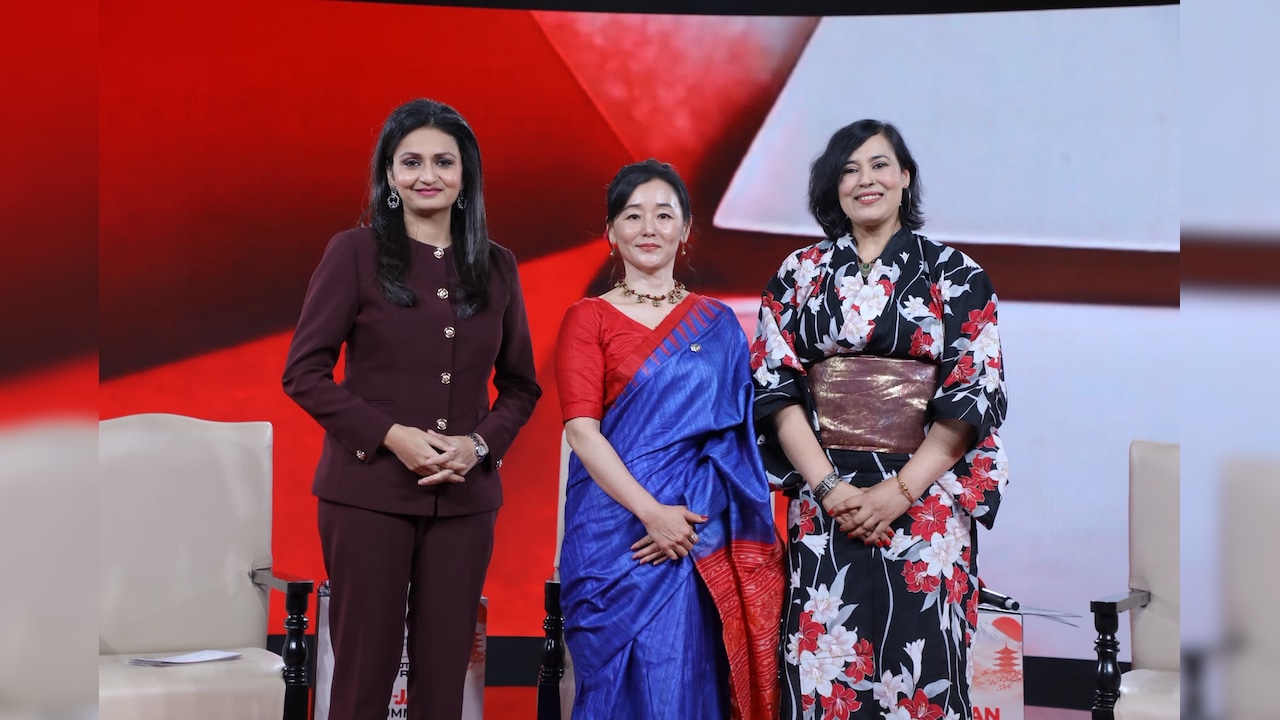
During a recent discussion at the NDTV Indo-Japan Summit session titled "Life, Culture and Belonging in India and Japan", two women who traded their homelands shared what happens when you strip away comfort zones. Kaori Naka, a Japanese national who has spent 15 years mastering Odissi, and Nupur Tewari, an Indian entrepreneur who has lived in Japan for 24 years, broke down the raw mechanics of belonging. They did not speak in corporate buzzwords. They talked about eyes, small train stations, plain dosas, and pears given by strangers.
The Art Form That Does Not Check Your Passport
Let us talk about artistic authenticity for a second. Naka faced an internal war that most critics would never understand. When you study a classical Indian dance form as an adult coming from an entirely different cultural background, the self-doubt can be deafening. She worried her eyes were too small to properly execute Abhinaya, the facial expression and storytelling component of Odissi.
She worried she would never look like an Oriya dancer. But here is the truth she discovered along the way: art does not care about your nationality.
Dance has its own grammar. When you submit entirely to the discipline of movement, physical borders dissolve. Naka cooks Indian food daily—her absolute favorite is a plain dosa—yet her connection to India is not about culinary tourism. It is about a total surrender to an art discipline. She learned that chasing an impossible standard of native birth is a waste of time. You either give yourself to the discipline, or you do not.
Finding Home in a Small Japanese Station
While Naka moved east to west, Tewari went the opposite direction. She landed in Shikoku, Japan, 24 years ago, long before Tokyo career tracks or expat bubbles existed. She did not know how to greet people properly. She did not speak the language. Yet, the sense of belonging hit her instantly.
Why? Because human kindness rarely requires a translator.
Tewari recalls a specific afternoon at a tiny rural train station in Yamaguchi where only two trains stop all day. An elderly local woman walked up, asked where she came from, and handed her a fresh pear. That single piece of fruit changed everything. It taught her a principle of reciprocity that now drives her professional life and her cultural bridge-building work through Connect India Japan. When someone gives you one, you want to give back five.
This challenges the notion that you need to master a language before you can feel at home somewhere. Connection happens in the quiet, mundane spaces. It happens at rural stations, local shrines, and neighborhood festivals.
Why Staying in Expat Bubbles Ruins the Experience
If you move abroad and immediately surround yourself exclusively with people from your home country, you are missing the entire point. Tewari offers sharp advice to young students and professionals heading to Japan: get out of the urban bubble. Tokyo is incredible, but it is not the soul of Japan.
To truly understand a foreign country, you have to do the uncomfortable work. Step away from the safety net. Attend local neighborhood festivals. Walk through shrines. Talk to people who have never left their prefecture.
At the same time, neither woman advocates for erasing where you came from. In fact, living abroad often forces you to wake up to your own heritage. Tewari noted that living in Japan made her fall deeply in love with Indian culture for the first time. Distance gives you perspective. You start to see the richness of a five-thousand-year civilization only when you step outside its borders and view it through an external lens.
Young people in both countries often suffer from cultural amnesia. Many urban Indians do not know their own classical art forms. Many Japanese youth look outward without appreciating the depth of their own traditions. The lesson here is simple. Stop treating cultural exchange like a one-way street where you discard your roots to adopt new ones. Build a two-way bridge instead.
Stop waiting for permission to belong. Whether you are learning a classical dance form in a country where you were not born, or waiting for a rural train with a stranger, belonging is an active choice. Put down your phone, step outside your comfort zone, and talk to someone who grew up differently than you did.