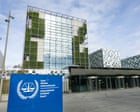
Foreign policy showdowns rarely turn this aggressive. Washington just ratcheted up its confrontation with The Hague, and the global legal establishment is reacting with shock. Secretary of State Marco Rubio didn't mince words when announcing the latest financial penalties against the International Criminal Court.
"Either the ICC will end its threats, or we will end the ICC," Rubio declared in a video posted online.
It's a stark escalation in a long-running feud. But what does this mean for global justice, American foreign policy, and the future of international law? Let's break down why this clash matters right now and where things are heading.
The Anatomy of a High-Stakes Financial Siege
The latest move from the White House isn't just symbolic rhetoric. It carries heavy administrative and economic weight. The Trump administration has officially blocked any assets the international tribunal holds within US jurisdictions. Furthermore, it's giving American citizens and businesses a strict six-month window to wind down any professional interactions or business with the court.
Think about what that entails. Law firms, human rights organizations, investigators, and academic institutions with American ties now face serious legal exposure if they assist the tribunal in its work.
The rationale coming from Washington is built on sovereignty. Officials argue that the US never signed the Rome Statute, meaning American citizens and military personnel shouldn't answer to an external tribunal. When the court opened inquiries into actions by US service members in Afghanistan—and later targeted key Israeli officials like Prime Minister Benjamin Netanyahu—the administration viewed it as a direct threat.
Instead of diplomatic pushback, Washington chose financial warfare.
How the International Criminal Court is Fighting Back
The court in The Hague didn't stay quiet. Leadership released a pointed statement calling the measures an explicit assault on the rule of law and an attempt to obstruct justice.
"History will judge this moment," the tribunal warned, urging its member states to rally around its mandate.
The timing couldn't have been more ironic. Hours before Rubio announced the financial penalties, a former ICC judge was awarded the Nobel Peace Prize for promoting international law. That juxtaposition highlights the deep ideological chasm between Washington and the global legal community. One side sees an indispensable check on atrocities; the other sees an unaccountable body overstepping its bounds.
This tension isn't entirely new. During his first term, Donald Trump targeted the tribunal with similar executive actions, though those restrictions were later rolled back under the Biden administration. When Trump returned to office in 2025, he revived the playbook immediately, signing orders targeting prosecutors, judges, and eventually court president Tomoko Akane.
Now, the pressure campaign has reached a boiling point.
What Happens When Superpowers Ignore the Rules
You might wonder what practical effect sanctions from Washington have on a court based in the Netherlands. After all, the judges aren't trying to open bank accounts in New York.
The real impact lies in institutional friction and secondary compliance. Financial institutions globally often adhere to US sanctions guidelines to avoid getting locked out of the American banking system. If international banks refuse to handle tribunal transactions out of fear of US retaliation, the court's operational capacity shrinks dramatically. Investigations cost money. Expert witnesses need travel funding. Secure communications require technical infrastructure. Cutting off financial lifelines makes complex war crimes investigations exceptionally difficult to sustain.
Critics at the United Nations have voiced alarm, warning that normalizing financial attacks on judicial bodies opens a dangerous precedent. If powerful nations can simply penalize judges whose rulings they dislike, accountability for war crimes, genocide, and crimes against humanity becomes nearly impossible to enforce on the global stage.
At the same time, supporters of the administration argue that international bodies need accountability too. They contend that unchecked prosecutorial overreach threatens sovereign nations and undermines democratic stability.
This standoff leaves smaller nations caught in the middle. They rely on the international legal order for protection, yet they lack the leverage to shield institutions from superpower retaliation.
Expect further friction in the coming months as the six-month wind-down window closes and compliance tests the resolve of international allies. Check your own organization's exposure if you operate at the intersection of international law and American commerce, because the compliance net is tightening fast.