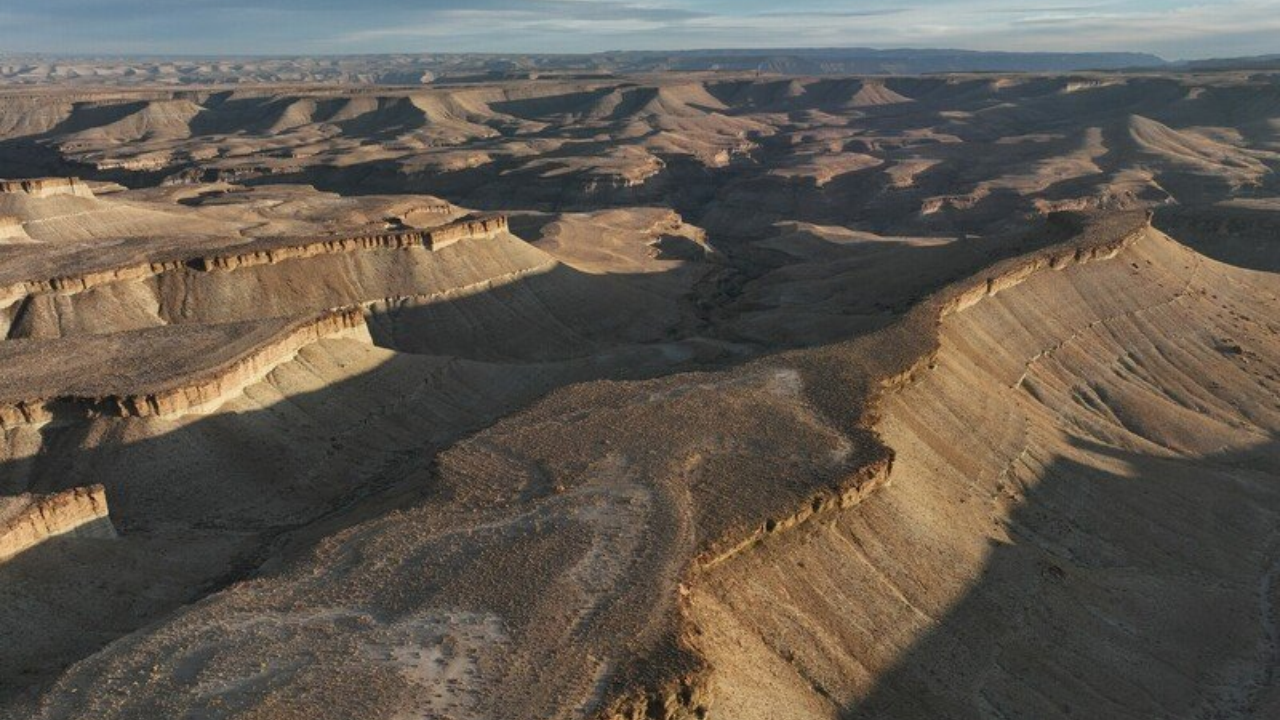
When local governments decide to blast through ancient canyon walls to make room for industrial oil traffic, conservationists don't just complain—they sue. That is the exact reality unfolding in eastern Utah right now, where a controversial 5.3-mile road widening project has triggered a fierce legal battle in federal court. At stake aren't just empty stretches of dirt and brush. We are talking about dozens of fragile historic sites, rare wildlife habitats, and nineteenth-century rock inscriptions carved by people who helped shape the American West.
If you have been following energy infrastructure developments in the U.S., this conflict looks painfully familiar. Duchesne County wanted a better trucking route to connect local fields to the bustling Uinta Basin oil patch. After two earlier attempts stalled out, officials landed on Gate Canyon Road. The plan? Widen, straighten, and pave the track. The catch? Doing so requires dynamiting sheer canyon cliffs towering nearly a hundred feet high.
Conservation groups had enough. Organizations including the Center for Biological Diversity, the Southern Utah Wilderness Alliance, and the Nine Mile Canyon Coalition filed a lawsuit in the U.S. District Court for the District of Utah. They argue that federal agencies pushed the project through without doing the necessary homework on cultural and environmental fallout.
The Historic Toll Hidden Inside Gate Canyon
Why are preservationists so furious over a short stretch of road? It comes down to what sits right on those canyon walls. The federal complaint highlights at least forty-seven distinct historic sites sitting directly along or near the existing route.
Among these are rare inscriptions left behind by Black American soldiers who served in the U.S. Army's Buffalo Soldier regiments during the nineteenth century. European pioneers, freighters, and early travelers also marked their passages here—sometimes using simple axle grease to write their names into the stone. Out of those forty-seven recorded sites, forty-three meet the criteria for the National Register of Historic Places.
When you start detonating explosives to clear out one-hundred-foot rock faces, history turns to dust. You cannot rebuild nineteenth-century handwriting once it gets blasted into gravel.
The Shadow Over Nine Mile Canyon
Gate Canyon does not exist in a vacuum. It feeds directly into Nine Mile Canyon, widely hailed as the world's longest art gallery. Stretching for roughly forty-six miles, this dramatic desert corridor holds over a thousand distinct rock art locations featuring upwards of ten thousand individual images. Some of these petroglyphs and pictographs date back thousands of years, left behind by prehistoric indigenous populations.
Local politicians view Gate Canyon Road as a practical upgrade that trims transit times for heavy commercial freight. Critics see things differently. They argue that paving the track acts as an open invitation for a massive surge in heavy oil-truck traffic. More trucks mean more vibration, more dust settling on ancient rock art, and a fundamentally altered landscape.
The legal challenge targets the U.S. Bureau of Land Management for signing off on the project in April without a proper review. Plaintiffs argue the agency violated a laundry list of federal environmental and preservation statutes, including the National Environmental Policy Act and the National Historic Preservation Act. They also claim the government failed to consult wildlife officials regarding the threatened Mexican spotted owl, whose breeding and roosting grounds overlap with the construction zone.
What Happens When Energy Demands Clash With Heritage
Energy extraction and heritage preservation have been at war for decades. Counties want economic growth, tax revenue, and efficient logistics. Federal land managers walk a tightrope between resource development and conservation mandates. Public interest groups act as the aggressive watchdogs keeping federal feet to the fire.
The Department of the Interior has stayed quiet, offering no comment while litigation remains pending. Meanwhile, the legal clock is ticking. Conservationists are asking the court to completely vacate the federal approval before heavy machinery rolls in and starts drilling holes for dynamite.
If the courts block the project, local planners will have to head back to the drawing board for a third or fourth time. If the courts rule in favor of the county, a small piece of American history might get paved over in the name of domestic energy production.
Keep an eye on the U.S. District Court docket for Utah. This case will set a major precedent for how public lands balance industrial expansion with cultural resource protection.