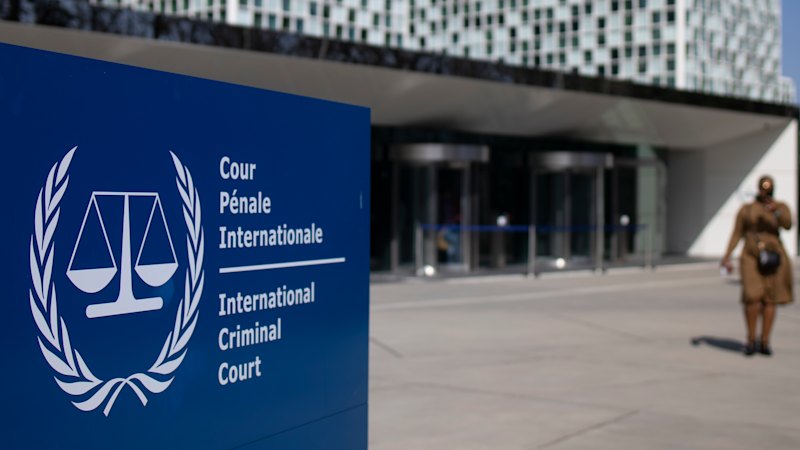
The rules-based international order is facing its most direct stress test in decades. When Secretary of State Marco Rubio stepped up to announce sweeping financial sanctions against the International Criminal Court, it wasn't just a policy shift. It was an outright declaration of economic and political war against an institution based in The Hague.
If you think this is standard diplomatic posturing, look closer. The Trump administration isn't just complaining about global oversight; they're trying to starve the court out of existence. Financial restrictions, transaction bans, and targeted threats against anyone doing business with the court represent a calculated attempt to dismantle global judicial accountability brick by brick.
The Breaking Point Behind the Sanctions
Washington’s escalation didn't happen in a vacuum. For years, friction between American foreign policy and the International Criminal Court has simmered. But things boiled over when prosecutors in The Hague set their sights on high-ranking officials from allied nations, alongside lingering resentment over potential investigations into American military conduct in Afghanistan.
When the court issued arrest warrants for Israeli Prime Minister Benjamin Netanyahu and former Defense Minister Yoav Gallant, the White House saw a red line crossed. Trump and his cabinet didn't mince words. They framed the court's actions as a direct threat to national sovereignty.
Rubio made the administration's stance crystal clear. The White House insists that a non-signatory state like the United States—and its primary democratic allies—will never submit to the jurisdiction of unelected international judges. By weaponizing the US financial system, the administration aims to cut off the court's operational oxygen entirely.
Inside the Financial Chokehold
The mechanics of these new sanctions are designed to paralyze. Under the directives rolled out by the State and Treasury departments, commercial entities, banks, and legal vendors maintaining ties with the ICC face severe federal penalties.
While the administration included a 180-day grace period with temporary licenses for certain operations, the message to the corporate world is unmistakable. Do business with the court, and risk being locked out of the American economy.
- Transaction Bans: Prohibits financial flows to and from the institution.
- Corporate Risk: Forces global contractors and legal suppliers to choose between servicing The Hague or losing access to US markets.
- Individual Targeting: Builds upon existing visa restrictions and asset freezes targeting specific judges and prosecutors.
Most international bodies lack a physical police force, relying instead on the voluntary compliance of member states. When the world's largest economic superpower actively criminalizes financial interaction with that body, survival becomes an uphill battle.
The Global Pushback and the European Dilemma
The response from the international community reveals a deep fracture in global diplomacy. Out of roughly 200 nations, 125 are bound by the Rome Statute. European Union leadership immediately condemned the American sanctions as a deep blow to the global rule of law, promising to help the court maintain its operational resilience.
Yet, solidarity on paper often looks different in practice. European financial institutions and multinational corporations are notoriously risk-averse. When forced to weigh abstract loyalty to international jurisprudence against the very real threat of secondary sanctions from Washington, compliance departments usually blink.
Court officials are trying to put up a brave front. Tomoko Akane, the court's president, has repeatedly emphasized that a permanent global judicial body must weather political storms. But resilience requires funding, legal cooperation, and secure administrative infrastructure—all things that heavy-handed American sanctions are engineered to disrupt.
What Happens Next for Global Accountability
The battle lines are drawn. On one side stands an American administration willing to use its unmatched financial dominance to shield itself and its allies from external prosecution. On the other stands a bruised international legal framework desperately trying to prove that no nation is above the laws of war.
If you are watching global markets, international law, or geopolitical stability, this clash matters. It signals a permanent shift away from multilateral consensus and toward raw, unbridled power politics. The court may survive the current onslaught through emergency contingency funds and quiet European backchannel support, but its authority has been permanently altered.
The era of trusting international institutions to regulate global conflict without major pushback is over. Watch how European capitals respond to Washington's secondary pressure over the coming months. That reaction will dictate whether the rules-based order adapts or completely fractures.