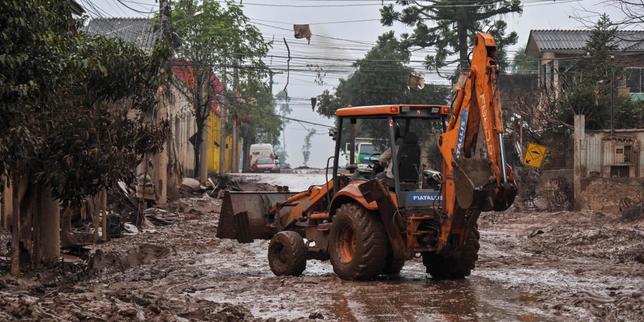
You can't hide behind corporate emissions spreadsheets anymore when entire cities wash away. That is the clear message coming out of Brazil right now, where prosecutors just filed an unprecedented lawsuit against Shell's local subsidiary, demanding roughly 108 million dollars in compensation.
If you've been following climate litigation, you know things are shifting. We've moved past polite corporate social responsibility reports and straight into high-stakes courtroom battles where fossil fuel giants are being asked to pay cold, hard cash for extreme weather events.
The Breaking Point Behind the 2024 Floods
Back in 2024, the southern part of Brazil experienced catastrophic flooding that left nearly 200 people dead and forced half a million from their homes. It wasn't just a bad storm season; it was a human tragedy of massive proportions that devastated communities in the Rio Grande do Sul region.
Instead of treating this purely as an act of God or standard natural disaster, the Brazilian public ministry is doing something radical. They're tying the disaster directly to global heating, and more importantly, they are holding a major energy producer accountable in direct proportion to its historical contribution to greenhouse gas emissions.
The math behind the lawsuit splits the 108 million dollars into equal parts: 270 million reais for environmental and moral climate damages, and another 270 million reais for direct material damages. Prosecutors aren't guessing; they are pointing a direct finger at corporate accountability for climate change impacts on the ground.
Why This Case Is Different From Other Climate Lawsuits
You've probably heard about other climate cases making waves globally. Victims of a 2021 typhoon in the Philippines have been suing Shell in the United Kingdom. Islanders in Indonesia are taking on Swiss cement giant Holcim over rising sea levels. Pakistani farmers have targeted energy firms in German courts after devastating floods.
What makes the Brazilian action stand out is the direct mechanism of targeting a major subsidiary inside the country where climate impacts struck hardest, demanding concrete financial restitution for specific domestic loss of life and property. It transforms abstract carbon accounting into local courtroom reality.
Companies love to talk about net-zero targets decades down the line. They love vague pathways and distant deadlines. But when prosecutors demand immediate accountability for lives lost and homes destroyed today, the conversation changes instantly.
What Happens Next
Shell hasn't rushed to offer easy answers, and their local Brazilian branch didn't immediately reply to media requests for comment when the filing dropped. That silence speaks volumes. Big oil knows that if courts in the global south begin successfully pinning climate disaster bills onto balance sheets, their entire risk model collapses.
Expect other national prosecutors to watch this case closely. If Brazil succeeds in making a multinational energy company foot the bill for climate-fueled extreme weather, legal teams across Latin America and beyond will copy the playbook.
You can't emit greenhouse gases on a global scale and expect local communities to shoulder 100 percent of the financial and human cost forever. The courtroom doors are wide open, and the bill has finally arrived.