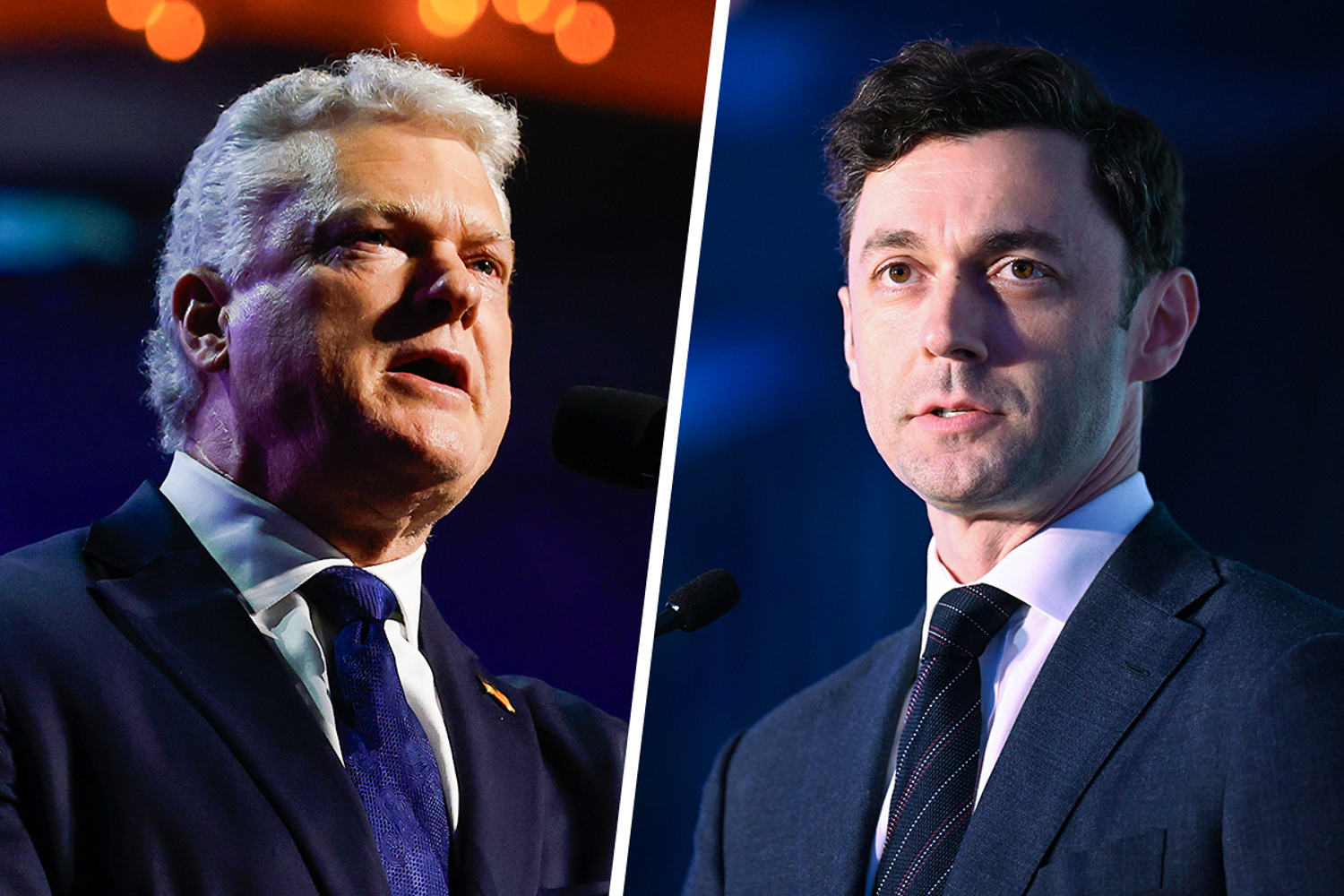
When Democratic Senator Jon Ossoff and Republican Congressman Mike Collins took the debate stage inside Gray Media's Atlanta studio, nobody expected a polite policy discussion. Georgia politics doesn't work that way anymore. This state sits at the center of the national map, and the first major showdown of the 2026 Senate race quickly turned into an hour-long, bare-knuckle brawl over who bears responsibility for the economic and political scars left by past and current administrations.
If you want to understand why voters in Georgia are so frustrated right now, you just had to watch these two candidates tear into each other's voting records. They didn't spend much time talking about abstract political theories. Instead, they fought over groceries, gas prices, foreign conflicts, and the polarizing legacy of Donald Trump and Joe Biden.
The Economy and the Tariff Fight
Affordability dominated the evening from the very first question. Georgians are feeling the squeeze at the pump and the checkout counter, and both candidates knew they had to pin the blame on someone else.
Collins went straight for the Biden-era playbook. He argued that historic inflation stemmed directly from federal spending packages and policies supported by Ossoff and congressional Democrats. He pointed to energy independence as the primary casualty, claiming that decisions early in the decade crushed domestic oil production and sent utility bills skyrocketing.
Ossoff hit right back, aiming squarely at Collins's support for Trump's tariff agenda. The incumbent senator argued that blanket tariffs on foreign goods have severely hurt Georgia farmers and manufacturing sectors, driving up the cost of living for everyday families.
"If you want to understand whether the Trump-Collins budget has helped you, just go fill up a tank of gas, go to the grocery store, try to buy food for your kids, look at your electric bill this year," Ossoff told the audience.
Collins defended the tariffs as a necessary tool to protect domestic industry and force trade partners to play fair, while insisting that tax cuts championed by Trump are what's keeping money in working-class pockets.
Personal Attacks and Character Clashes
The debate didn't stay on economics for long. Things got deeply personal when the conversation shifted to congressional votes, foreign policy, and personal background.
Ossoff pressed Collins on foreign affairs, demanding an explanation for his votes regarding military action involving Iran and questioning his defense of the Trump administration's shifting justifications for the conflict. The incumbent framed his challenger as an extremist out of touch with the mainstream electorate. At one sharp moment in the exchange, Ossoff invoked civil rights history to criticize his opponent's hardline stances on voting access and security.
Collins fired back by portraying Ossoff as a partisan liberal who votes in lockstep with the progressive wing of his party. The Republican congressman accused Ossoff of dodging scrutiny over his own legislative record and trying to distract voters with personal insults rather than addressing border security and crime. Collins also brought up controversies surrounding Ossoff's campaign events and argued that the senator's policy positions fail to reflect true Georgia values.
What This Means for November
Georgia remains one of the ultimate purple battlegrounds in American politics. A state that flipped narrowly for Biden in 2020 and then backed Trump in 2024 is now hosting one of the most expensive and fiercely contested Senate races in the country.
Incumbent defense is tough in a state where a huge portion of the electorate remains dissatisfied with the national trajectory. Collins is betting that tying Ossoff to unpopular economic trends from the previous federal administration will peel away enough independent voters to flip the seat. Ossoff is banking on his local ground game, a massive fundraising advantage, and tying Collins directly to controversial national policies and figures.
The gloves are off. With the election fast approaching, neither side is going to pull any punches. Voters in Georgia have a stark choice between two entirely different visions for the country's economic and political future, and neither candidate is willing to give an inch.