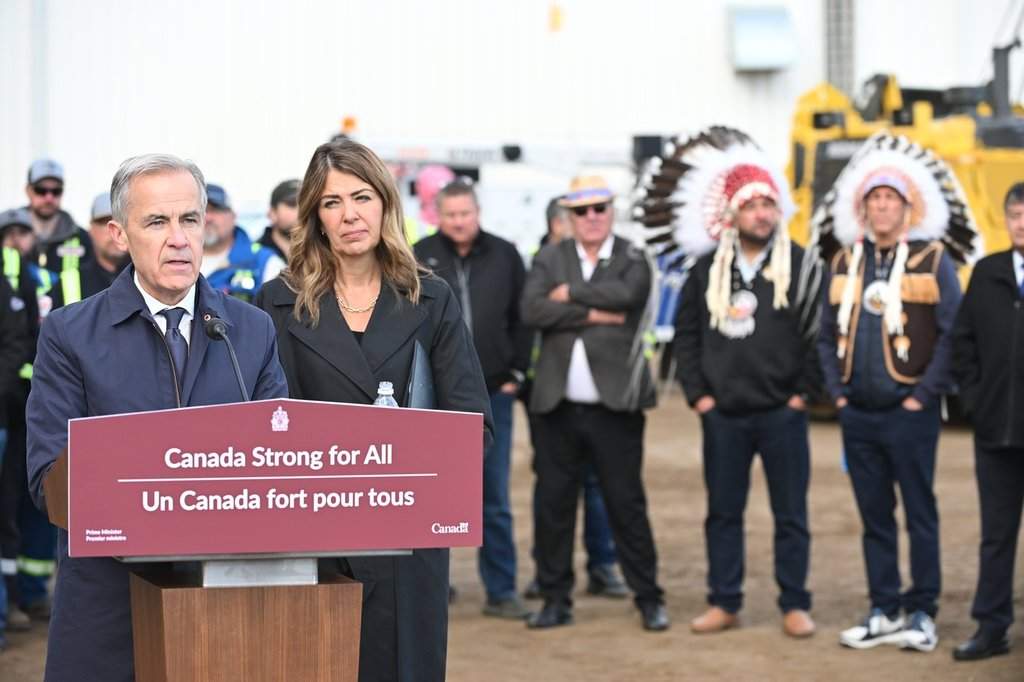
Optics can be a dangerous game in Canadian politics. When leaders line up behind a podium for a major announcement, cameras capture a neat picture of unity. But behind every staged photo op lies a messy reality that press releases rarely capture.
Take the recent rollout of the Pacific Link pipeline. When Treaty 8 Grand Chief Trevor Mercredi stood alongside Prime Minister Mark Carney and Alberta Premier Danielle Smith, observers instantly assumed it signaled Indigenous blessing for the project.
It didn't.
In fact, standing on a stage to make sure your people aren't left entirely out of the conversation is a far cry from signing off on a massive industrial build. If you think a two-month consultation window and a hurried "national interest" designation under the Building Canada Act equates to genuine consent, you're missing how modern resource politics actually work in this country.
The Illusion of Inclusion in Ottawa
The federal government wants the Pacific Link pipeline moving fast. They've targeted a construction start date of September 2027 to bolster the economy against mounting trade pressures from the United States. To hit that timeline, the Major Projects Office handed roughly 130 Indigenous communities a mere two months to weigh in on the project's fast-tracked status.
Two months. Think about the scale of a major pipeline corridor. Environmental reviews, water management plans, economic impact assessments, and constitutional rights evaluations usually take years. Handing communities sixty days to review a file and calling it a robust consultation process is a slap in the face.
Grand Chief Mercredi put it bluntly: the federal government is basically flying the plane while building it. They want a fast track, but they're building that track directly over Indigenous lands and entrenched constitutional rights.
Why Advisory Councils Are Being Left in the Dark
If you build an advisory council supposedly meant to bridge the gap between government ambition and Indigenous sovereignty, you should probably listen to them. Yet, Mercredi revealed that the Indigenous advisory council attached to the Major Projects Office was never even asked if a two-month consultation window was reasonable. They weren't asked if a 10 percent equity stake was enough to satisfy community risk.
Had anyone bothered to ask, the answer would have been a hard no.
When advisory bodies are treated as window dressing rather than active decision-makers, governments invite legal chaos. You can slap a "national interest" label on a project all you want, but paper decrees don't override Section 35 of the Constitution. If nations are shut out of the design phase, they hold the ultimate trump card: the courts.
The Cost of Skipping Free and Prior Informed Consent
Canada signed on to the United Nations Declaration on the Rights of Indigenous Peoples, which demands free, prior, and informed consent before pushing forward with projects affecting traditional territories. But industry pressure often champions a backwards approach. The playbook has long been to secure a forced "yes" first, figure out the details later, and deal with the fallout in court.
That strategy is broken.
Lawyers and policy experts point out that bypassing upfront, genuine consent creates massive risk for private investors. Capital markets hate uncertainty. When a project faces looming legal challenges from nations whose rights were sidelined, financial backing becomes shaky.
If Ottawa wants to build Canada strong, they have to accept a simple truth. True partnership requires starting with a real "yes" from Indigenous nations at the very beginning, not a coerced nod on a stage in Edmonton or Calgary.
Until governments learn that lesson, every photo op will hide a brewing legal storm. Rights remain intact, no matter how many acts parliament passes or how many podiums politicians share.