Geopolitics rarely features moments of genuine foresight. Leaders usually react to immediate crises. They scramble for quick wins. Late Japanese Prime Minister Shinzo Abe played a completely different game. Nearly two decades ago, he looked past Tokyo's traditional post-war alliances and spotted a rising demographic powerhouse in South Asia. He decided that Tokyo and New Delhi needed to forge an unbreakable partnership.
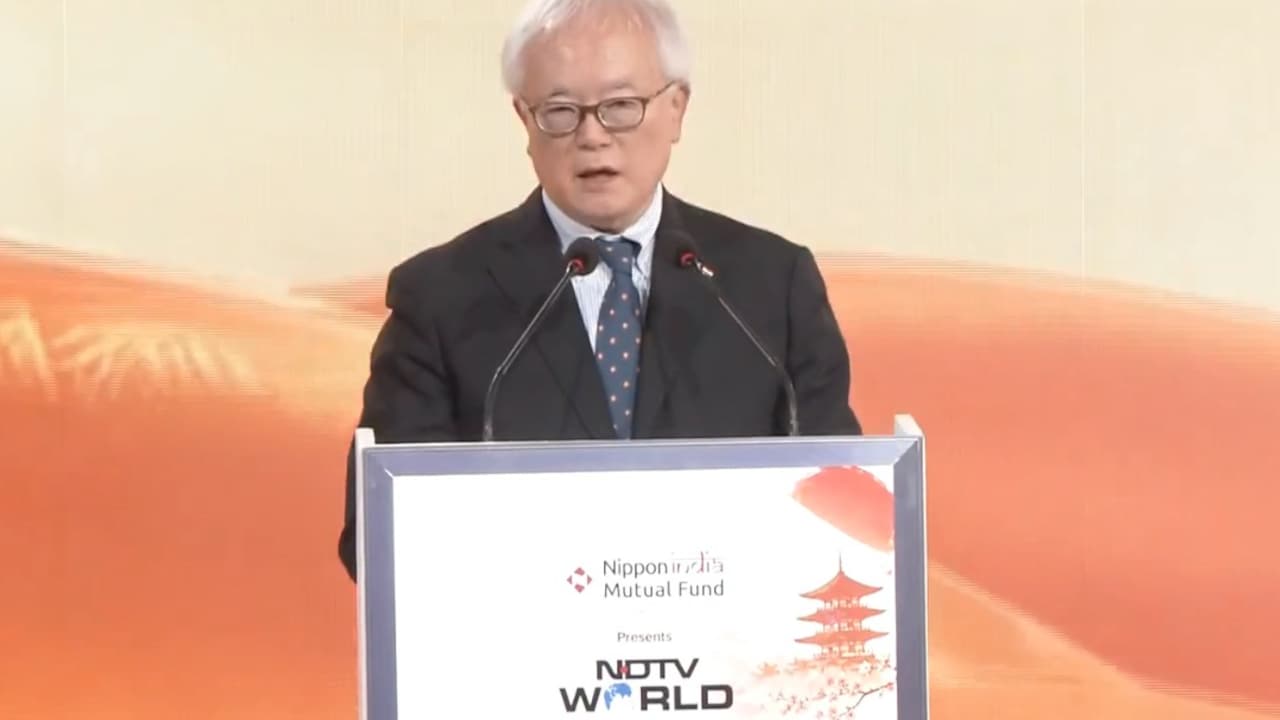
Tomohiko Taniguchi, Abe's former special adviser, recently reminded everyone at an NDTV Indo-Japan Summit in New Delhi why that bet was made. Abe wanted Japan to expand its strategic footprint as China's military capabilities scaled up. Tokyo needed a reliable, massive democratic counterweight. Taniguchi put it bluntly during the event, stating that no nation was better fit than India from that perspective.
You cannot understand modern Asian geopolitics without looking at how Abe shifted Tokyo's diplomatic posture. Back in 2007, standing before the Indian Parliament, Abe delivered his famous "Confluence of the Two Seas" speech. He connected the Indian and Pacific Oceans in the global imagination. That wasn't just poetic phrasing. It laid the groundwork for what we now call the Free and Open Indo-Pacific strategy.
Japan needed partners with youth, velocity, and democratic values. India checked every box. India possessed a booming young population, rapid technological advancement, and a massive domestic market. Tokyo recognized that partnering with New Delhi wasn't just a nice diplomatic gesture. It was a vital survival mechanism for maintaining regional balance.
The Evolution of India's Maritime Strategy
India didn't sit back while regional dynamics shifted. Former Indian Ambassador to Japan Sanjay Kumar Verma highlighted at the same summit how New Delhi's maritime strategy matured over the years. India started with the Act East policy to strengthen bonds across Southeast Asia. Then came SAGAR, which stands for Security and Growth for All in the Region.
New Delhi kept adding layers. They introduced the Indo-Pacific Oceans Initiative to tackle technology, maritime trade, and environmental connectivity. Prime Minister Narendra Modi later advanced the MAHASAGAR vision. India moved from a localized maritime focus to an expansive continental-marine vision.
Think about trade routes. Both India and Japan rely heavily on uninterrupted maritime commerce. When shipping lanes through the Red Sea or the Strait of Hormuz face disruptions, economies in Tokyo and New Delhi feel the shockwaves immediately. China depends on those exact same sea lanes too. Yet, Beijing's aggressive actions in places like the South China Sea and around Taiwan threaten the international rules-based order.
Taniguchi didn't mince words regarding Taiwan. If Taiwan eventually integrates into China by force, Japan's strategic space shrinks drastically. Tokyo faces a brutal decade ahead. Managing China's expansive ambitions requires absolute unity among like-minded democracies.
The Real Purpose of the Quad
People misunderstand the Quad grouping of India, Japan, the United States, and Australia all the time. Critics treat it like a traditional military pact. It isn't.
Verma clarified that the Quad functions as an instrument of the Indo-Pacific, rather than the Indo-Pacific itself. The grouping must focus on practical supply chain security. Critical minerals and advanced electronics components form the backbone of modern technological survival. If countries rely on a single dominant supplier for rare earth minerals and battery components, they hand over their national sovereignty on a silver platter.
Abe envisioned this exact vulnerability years ago when he proposed the Asia Democratic Security Diamond. He wanted a security network linking Tokyo, New Delhi, Canberra, and Washington to safeguard open waterways and democratic institutions. Today, that vision translates into joint naval drills, secure tech supply chains, and coordinated economic diplomacy.
What Comes Next for the Partnership
If you look at the ground reality, economic ties must accelerate alongside strategic defense agreements. Japanese investments in Indian infrastructure have transformed urban transit networks, like the Delhi Metro. Yet, businesses in both countries still face bureaucratic friction.
To make this partnership truly bulletproof, policymakers need to remove trade barriers and fast-track technological cooperation in artificial intelligence, semiconductors, and green energy. Stop treating India-Japan relations as a diplomatic footnote. Build your business strategies around this corridor. Secure your supply chains now before regional volatility forces your hand.