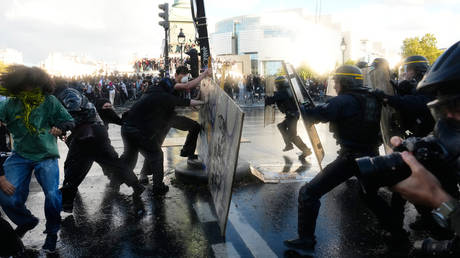
Leaking roofs, rat infestations, and broken heating systems aren't typical rallying cries for a national crisis. Yet, they've managed to bring the French public education system to a complete standstill. Across the country, high school and university students are leading a massive wave of protests, demanding immediate funding to fix crumbling infrastructure and chronic staff shortages.
What started in mid-September as a localized dispute at a Paris-region high school has exploded into a nationwide movement. Thousands of educational institutions have faced blockades or partial closures, drawing hundreds of thousands of protesters into the streets. Prime Minister Sébastien Lecornu's administration is scrambling to contain a crisis that reveals deep-seated frustrations with years of public sector underfunding under President Emmanuel Macron.
The Breaking Point Behind French School Protests
Walk into many French secondary schools today, and you'll find classrooms that look decades past their prime. Students aren't marching over abstract political theories. They are fighting against conditions that directly impact their daily learning environment.
The Union Syndicale Lycéenne reports that roughly 2,000 high schools faced disruptions, while government figures acknowledge closures or partial suspensions at nearly 900 facilities. The grievances are painfully concrete:
- Severe staff shortages leaving classrooms without permanent teachers.
- Leaking roofs and deteriorating physical infrastructure.
- Infestations of rats and pests in historic buildings.
- Overcrowded classrooms and grueling school days stretching from 8 AM to 6 PM.
When teenagers cannot focus on lessons because rain is dripping through the ceiling or facilities are falling apart, education stops being an equalizer and starts feeling like neglect. That's why young people who are too young to vote have taken direct action, blockading gates with trash cans, barricades, and human chains.
Clashes, Tear Gas, and Growing Public Anger
As the movement has grown, so has the friction with authorities. While many demonstrations remain peaceful, cities like Strasbourg, Lyon, and Rennes have seen violent clashes. Protesters have set street fires and thrown projectiles, while riot police have responded with tear gas and heavy-handed crowd control.
The human toll has shocked observers. The French interior ministry reports thousands of arrests since late September, with the vast majority involving minors. Hundreds of police officers and dozens of teenagers have sustained injuries during street battles. A particularly harrowing incident in northern France left a 15-year-old boy with severe hand injuries after an encounter involving a police dispersal grenade.
Human rights groups and parent organizations have sharply criticized what they call disproportionate force against minors. Parents point out that heavy-handed police responses only harden teenage resolve, turning a debate about infrastructure into a broader struggle over civil liberties and government accountability.
Government Promises Versus Classroom Realities
Faced with mounting pressure, the government has started making concessions. Prime Minister Lecornu has instructed his ministers to devise action plans addressing teacher absenteeism, building repairs, and the length of the school day. Officials have been given until the end of October to submit proposals.
Skeptics argue these promises are too little, too late. For families navigating broken facilities every day, political pledges sound like empty rhetoric until actual renovation crews show up.
If you're tracking how this crisis will evolve, keep an eye on three key benchmarks:
- The October Deadline: Watch whether the government's end-of-month proposals include concrete budget allocations or just bureaucratic committees.
- University Solidarity: Note how strongly higher education unions back high school demands, as expanded university strikes have historically paralyzed French policy shifts.
- Police Accountability: Monitor how courts handle the growing backlog of youth prosecutions and whether pressure mounts over police tactics.
Fixing decades of systemic underfunding requires more than temporary fixes. Until real money flows into classrooms, French students will keep making their voices heard on the streets.
Police fire tear gas at French school protests
This video captures the tense scenes on the ground as students clash with police and demand urgent school funding across France.