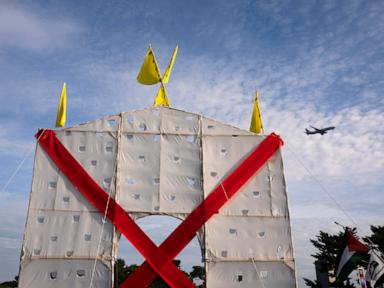
Donald Trump wants to build a massive 250-foot Triumphal Arch near Arlington National Cemetery, but local officials are pushing back hard. The Arlington County Board filed a federal lawsuit in the Eastern District of Virginia to halt the project, marking the first time a governmental body has taken direct legal action against the controversial monument.
If you've followed Trump’s sweeping infrastructure plans for Washington, D.C., you know this isn't his first high-profile clash over public land. But this particular battle hits close to home for Virginians who argue that the rapid push to build the arch is skipping vital environmental reviews and trampling local zoning rules.
Here is what is really driving the legal showdown, what critics are saying about the design, and why this federal court fight matters.
The Core of the Arlington County Lawsuit
Arlington County didn't jump into court on a whim. The lawsuit, filed with legal representation from Democracy Forward, accuses the National Park Service of rushing the planning process to satisfy presidential orders rather than following federal law.
According to the complaint, the agency is speeding toward ground-disturbing construction at Memorial Circle while pretending a final decision hasn't been made yet. County leaders argue that this fast-tracked approach is a pretext designed to bypass meaningful environmental impact studies.
The structure is slated for a sensitive gateway location right across the river from Washington, D.C. Local officials maintain that a project of this scale will severely impact traffic, local infrastructure, and the character of the surrounding community.
Design Specs and the Controversy Over Scale
At 250 feet tall, Trump's proposed memorial arch dwarfs many of the world's most famous monuments. For comparison, France's historic Arc de Triomphe stands at roughly 164 feet.
Critics and historic preservation groups point out several glaring issues with the scale and placement:
- Visual Intrusion: Virginia's State Historic Preservation Officer noted that the arch's massive footprint is designed to visually dominate the landscape, casting a shadow over historic viewsheds.
- Disrupting History: The Memorial Avenue Corridor was originally planned as a solemn, ceremonial gateway connecting North and South. Opponents argue the arch fundamentally alters that historic symbolism.
- Environmental Oversight: The National Park Service's internal assessments previously noted that the structure is so large it could intrude on established landmarks across the capital.
The administration has lined up early backing from the U.S. Commission of Fine Arts—whose members were appointed by Trump—keeping the project alive despite fierce local pushback.
Broader Legal Battles and Safety Concerns
The Arlington County lawsuit isn't sitting in a vacuum. It joins a growing stack of legal challenges targeting Trump's administration over public land use, historical preservation, and federal spending in the D.C. area.
Earlier, a group of Vietnam veterans and an architectural historian filed a separate federal lawsuit in Washington, D.C., arguing that Congress never authorized the monument. A federal judge in that case ordered the administration to provide 48 hours' notice before starting any preparatory construction work.
Safety advocates have also weighed in. Unions and public figures have raised red flags about the multi-use aspects of the proposal, pointing to security and airspace concerns near flight paths over the Potomac River.
With the National Capital Planning Commission eyeing a key vote soon, the legal timeline is tight. Trump remains eager to push ground during his term, but federal judges will ultimately decide whether the 250-foot arch gets built or gets permanently blocked by the courts.