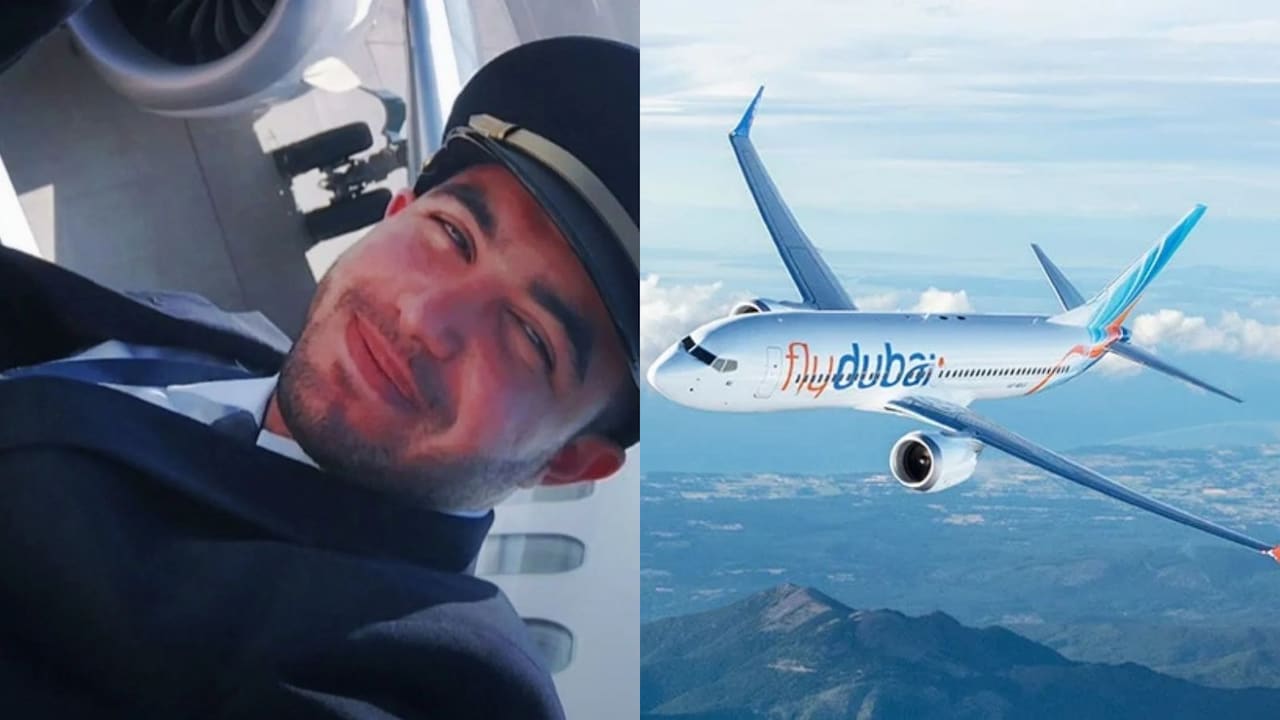
Commercial aviation relies on a fragile trust. You strap into a metal tube, push away from the gate, and place your life entirely in the hands of two people behind a locked flight deck door. You assume they want to land safely just as much as you do. On September 30, that assumption shattered on flydubai flight FZ1073.
The incident wasn't just a mid-air scuffle. It was a calculated, chilling plot hatched years prior. According to United Arab Emirates prosecutors, the 29-year-old Omani co-pilot confessed to planning a suicide attack modeled directly after the September 11 World Trade Center tragedies. His target wasn't an empty field or a random coastline. He wanted to plow the passenger jet straight into the terminal of Ben Gurion Airport in Tel Aviv.
How the Plot Unfolded
We tend to think of radicalization as a sudden break from reality. Security agencies love to frame lone actors as overnight conversions. The truth is much more methodical.
Investigators revealed that the co-pilot, identified in reports as Hamam al-Hammami, began developing extremist views back in 2017 while studying in Australia. For years, those beliefs simmered beneath the surface of a seemingly normal professional life. He secured a commercial pilot license, climbed through the ranks, and joined flydubai, slipping past background checks that miss ideological shifts.
He didn't just wake up on September 30 and snap. Prosecutors noted he used two previous flights along the same route to scout the airspace, observe airport layouts, and test operational routines. He treated commercial airliners like weapons tests. On the third flight, he made his move.
Armed with the cockpit's emergency axe, he launched a sudden assault on Captain Smit Machchhar. The plane plunged roughly 17,000 feet in a terrifying dive as control fractured inside the flight deck. Blood pooled on the flight deck floor. The captain fought for his life while managing a crippled aircraft hurtling toward the ground.
The Breached Cockpit Door Myth
For decades, the global aviation security playbook has treated the reinforced cockpit door as an impenetrable fortress. After 2001, airlines welded the doors shut, installed heavy deadbolts, and added surveillance cameras to keep bad actors out.
The flydubai attack flipped that logic completely on its head. The threat wasn't someone trying to kick the door down from cabin class. The threat was already sitting in the left or right seat, wearing the same uniform, holding the same manuals.
When the co-pilot initiated the attack, passengers and crew didn't wait for automated protocols. A deadheading pilot on board, a flight attendant, and ordinary travelers rushed the flight deck, forcing the door open and physically subduing the attacker. Without their split-second intervention, flight FZ1073 would have rewritten aviation disaster history.
The plane eventually diverted safely to Tabuk Airport in Saudi Arabia. Captain Machchhar survived with severe injuries. The suspect sat down with his lawyer and confessed to acting alone, though regional prosecutors are currently scouring digital footprints, financial records, and international travel logs to see who else might have known.
The Uncomfortable Questions Airlines Avoid
We need to talk about pilot vetting. Right now, mental health screenings focus on depression, burnout, and substance abuse. They screen for fitness to fly, not ideological extremism or hidden political violence.
A commercial pilot has the ultimate keys to a destructive weapon. They have access to navigation systems, fuel loads, and kinetic energy capable of leveling city blocks. Yet, psychological evaluations rarely probe deep enough to catch radicalization or violent intent that hides behind a polished professional demeanor.
Airlines want a smooth, frictionless hiring machine. They want pilots trained, certified, and flying routes as fast as possible to meet surging global travel demand. Deep background checks spanning years of international study, social media history, and peer interviews cost money and slow down recruitment. Incidents like this prove that the current vetting model is broken.
What Happens Next
The fallout from flight FZ1073 goes far beyond one airline or one regional carrier. Aviation authorities across the Middle East, Europe, and North America are quietly auditing their internal security protocols right now.
Pilots are human beings exposed to the same radicalizing pipelines found on the internet, university campuses, and extremist forums worldwide. Pretending that a uniform and a clean logbook guarantee safety is dangerous.
The industry survived this attack only because a handful of passengers and crew refused to stay in their seats when the altitude dropped and chaos erupted. You shouldn't have to rely on fistfights inside a commercial cockpit to prevent a suicide run.
Review internal reporting channels, push for stricter behavioral monitoring during recurrent training, and accept that physical security measures mean nothing if the person at the controls wants to use the plane as a missile.