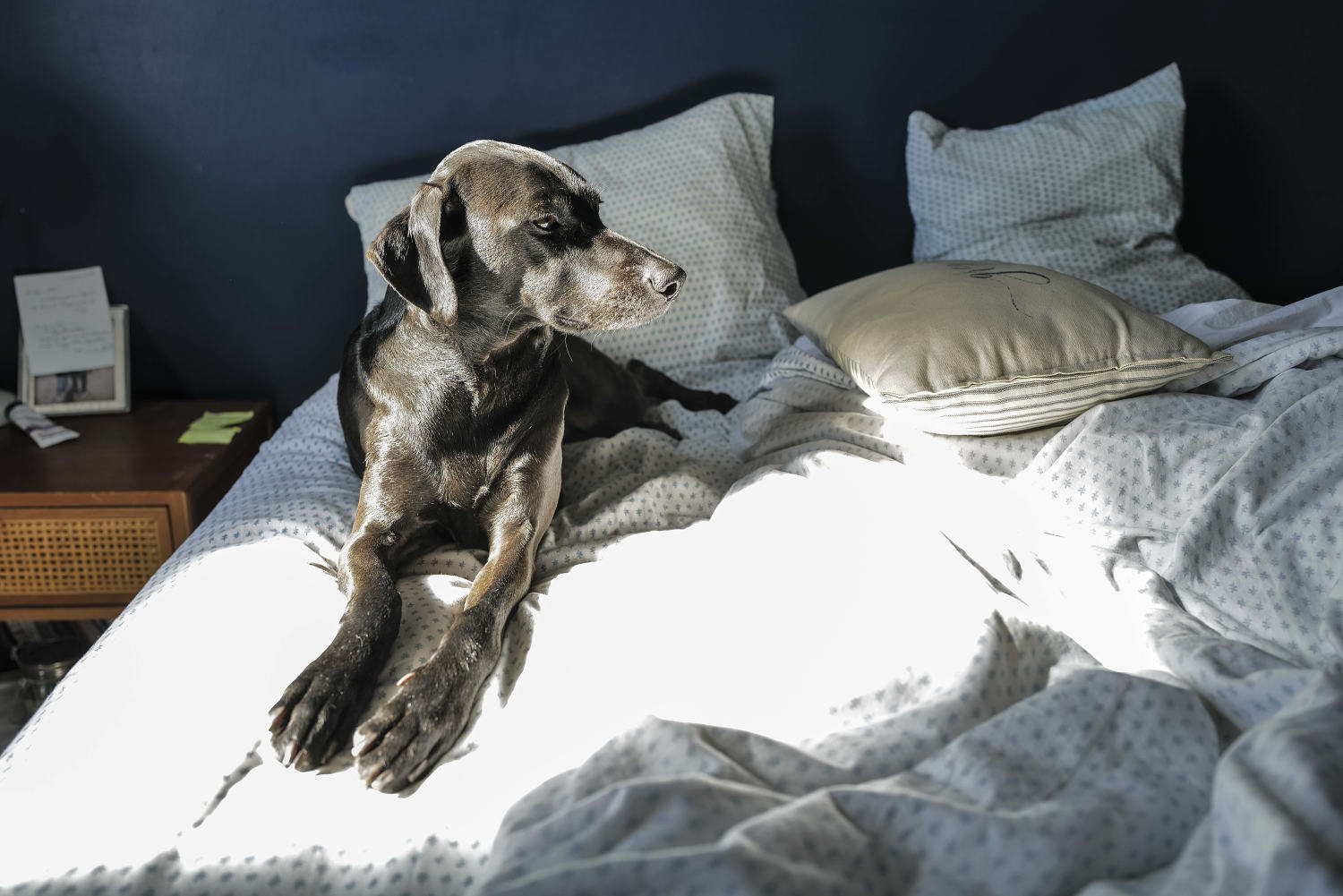
You wake up tangled in sheets, your alarm is screaming, and a sixty-pound golden retriever is somehow occupying seventy percent of your mattress. It is a familiar scene in millions of households. For decades, hygiene experts and strict sleep scientists warned against letting pets into the bedroom. They claimed nighttime movements would wreck your rest cycles.
Recent actigraphy-backed research tells a completely different story.
When researchers tracked human and canine sleep patterns using wearable devices and movement monitors, they discovered that having a dog nearby doesn't ruin your night at all. In fact, co-sleeping with a dog often provides a distinct psychological anchor that helps humans drift off faster and feel safer throughout the night.
What the Sleep Trackers Actually Reveal
For a long time, researchers had to rely entirely on subjective surveys. People would guess how well they slept, introducing plenty of bias. When behavioral scientists like Dr. Christy Hoffman at Canisius University started using actigraphs—wearable trackers that measure nighttime movements—the data became objective. If you want more about the history here, WebMD provides an in-depth breakdown.
The findings surprised the critics.
Dogs are remarkably considerate bed partners compared to humans or cats. Cats tend to prowl, jump, and disrupt REM cycles because of their nocturnal habits. Human partners hog blankets, snore aggressively, and toss and turn with work-related stress. Dogs, however, tend to synchronize their rest patterns with their owners much faster. Once they settle into a spot at the foot or side of the bed, they anchor themselves.
They stay put.
Studies show that dogs wake their owners far less frequently than human partners do. Furthermore, the psychological comfort of a warm body and a rhythmic heartbeat triggers a physical sense of security. Your cortisol levels drop. Your breathing slows down.
The Circadian Rhythm Advantage
Dog owners know the rigid tyranny of the morning walk. It forces you out of bed at 7:00 AM whether you want to move or not.
That biological anchor changes your entire sleep architecture. Research indicates that dog owners generally maintain much stricter bedtimes and wake times compared to people who live alone or own independent pets like cats. That consistency strengthens your circadian rhythm.
When your internal clock knows you are waking up at the same hour every single day, the evening sleep drive ramps up predictably. You fall asleep faster because your body isn't confused by erratic weekend schedules. The dog becomes an unyielding alarm clock that protects your biological routine.
When Co-Sleeping Fails
Let us be completely honest. Dogs in the bed are not a universal cure for insomnia. If you own a giant breed that takes up your entire mattress, or if your dog suffers from midnight anxiety, allergies, or fleas, your sleep quality will plummet.
Common pitfalls include:
- The Bed Hog Phenomenon: A small dog can take up more physical space than a full-grown adult because of how they curl up right in the middle.
- Midnight Disruptions: Puppies or senior dogs needing midnight bathroom breaks will fracture your sleep continuity.
- Allergen Accumulation: Dander and outdoor pollen hitching a ride on your dog's fur can trigger nighttime congestion.
If you notice you are waking up stiff, sneezing, or constantly fighting for blanket territory, the cozy arrangement is working against you.
How to Make It Work Without Sacrificing Rest
You do not have to banish your dog to the floor to fix your sleep, but you do need boundaries. Give your dog a designated spot. A heavy-duty orthopedic dog bed right next to your mattress often satisfies their desire for proximity while reclaiming your personal sleeping space.
If they must stay on the bed, invest in independent bedding layers so you aren't fighting for covers. Wash their sheets weekly to keep dander under control. Pay attention to your data. If your fitness tracker shows your sleep score tanking on nights your dog shares the mattress, it is time to enforce a floor-bed policy.
Comfort should never come at the absolute expense of recovery. But if your dog helps you feel secure, keeps you on a strict schedule, and lets you sleep undisturbed, ignore the old-school critics and let them stay.